
At TestVeta, every product that enters our formal review process is used and evaluated by a real editor. We don't write reviews from product pages, press releases, or feature lists.
Our editors sign up, install, use, compare, and—when necessary—pay for the products we test. We complete real-world tasks, document the results, examine pricing and privacy practices, and preserve evidence from the testing process.
Our goal is to turn a complicated software decision into a much simpler question:
Is it actually worth using?
1. About TestVeta
We test apps, so you don't have to.
Every day, new AI tools, apps, and digital products launch with similar claims, polished landing pages, and increasingly complicated subscription plans.
But what a product promises and what it actually delivers can be very different.
Some tools have dozens of features but fail at the task that matters most. Some look impressive in a demo but perform poorly in everyday use. Some advertise a free plan only for users to discover that the useful features are locked behind a subscription. Others look inexpensive until you consider cancellation, privacy, or long-term cost.
TestVeta was created to reduce that trial and error.
Our goal is to build an independent, professional, transparent, and trustworthy software testing and decision platform.
We believe useful reviews should not be based on marketing materials. They should be based on hands-on use, standardized testing, verifiable evidence, and independent editorial judgment.
Everything we publish is built around four principles:
Human Tested · Independent · Evidence Based · Transparent
2. How We Test
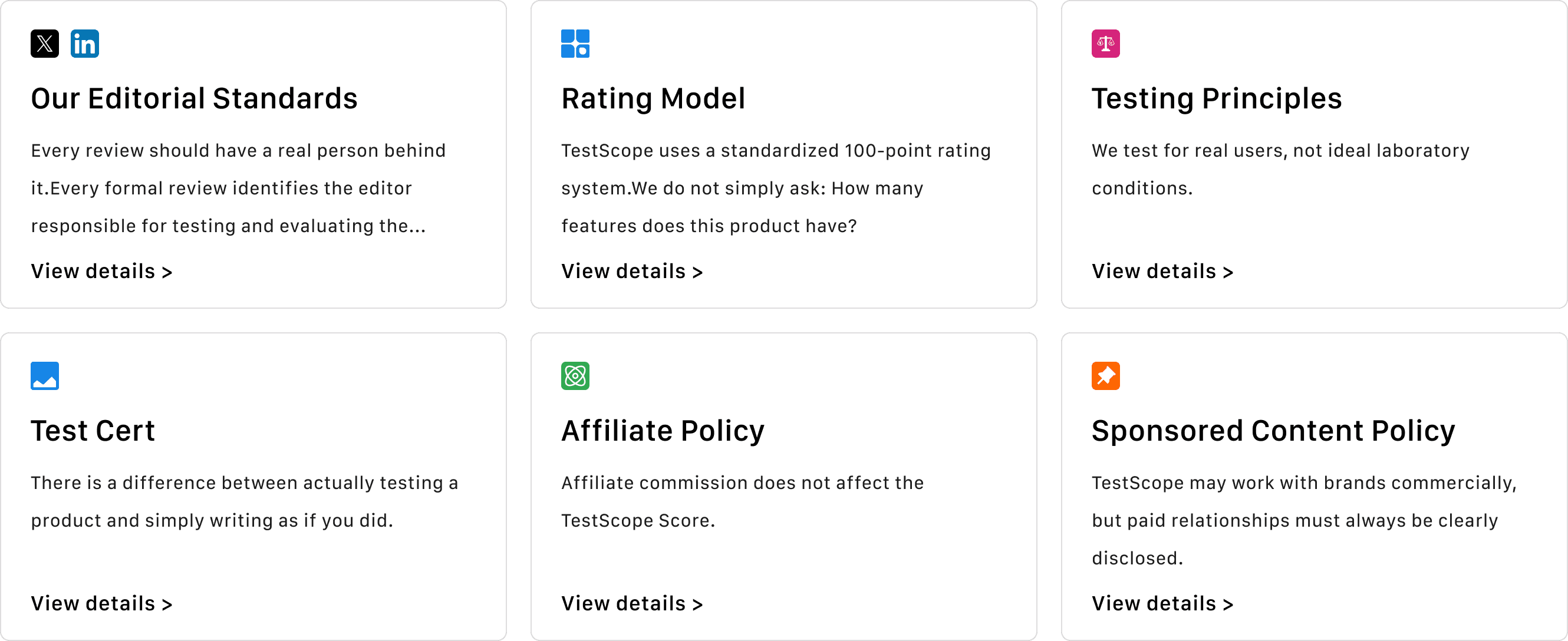
The TestVeta review system consists of six core layers:
2.1 Our Editorial Standards
Every review should have a real person behind it. TestVeta reviews are not anonymous.
Every formal review identifies the editor responsible for testing and evaluating the product. Editor profiles may include:
- Real name and photo
- Area of testing expertise
- Products tested
- Total testing hours
- Test cases completed
- Published reviews
- Recently tested products
- Public professional profiles such as LinkedIn and X
- Review and update history
2.2 Rating Model
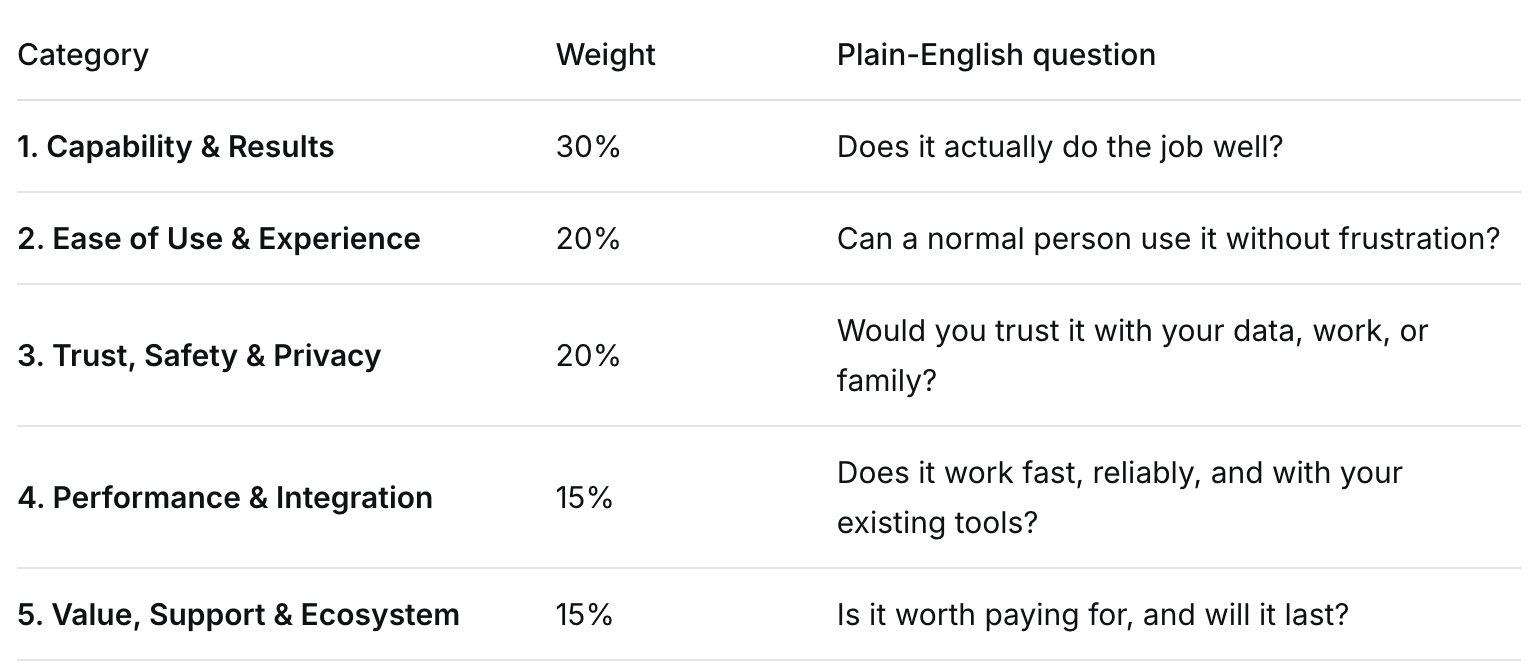
TestVeta uses a standardized 100-point rating system. We do not simply ask: How many features does this product have?
Instead, we evaluate whether the product actually helps its intended user complete the job it promises to solve. Every product is assessed across five primary dimensions:
2.3 Testing Principles
We test for real users, not ideal laboratory conditions. Our testing process follows several core principles.
Standardized: Products in the same category should face comparable tasks and conditions.
Real-world: We prioritize situations that actual users are likely to encounter.
Repeatable: Critical tests should be repeatable and produce reasonably consistent results.
Comparative: Best and VS content should place competing products within the same benchmark wherever practical.
Paid When Necessary: If meaningful functionality requires payment, we may purchase or use the paid version.
Version-aware: Results are tied to the version, platform, plan, and test date.
Evidence-first: Important conclusions should be supported with screenshots, outputs, testing records, or measurable results.
2.4 Test Cert
There is a difference between actually testing a product and simply writing as if you did.
Eligible TestVeta reviews display a testing record that may include:
- Tested by: The responsible editor.
- Testing Date: When the product was tested.
- Product Version: The version evaluated.
- Plan Tested: Free, trial, or paid.
- Devices: Platforms and devices used.
- Test Cases: Number of scenarios completed.
- Testing Time: Hands-on testing duration.
- Evidence: Screenshots, outputs, or testing records.
- Last Checked: The most recent verification date.
2.5 Affiliate Policy
Some TestVeta pages contain affiliate links. If you buy a product through one of these links, TestVeta may receive a commission.
Affiliate revenue can help fund editorial work, product subscriptions, test accounts, and the operation of TestVeta.
Affiliate commission does not affect the TestVeta Score. A product does not receive a higher rating because it pays a commission. A product without an affiliate program can still become our Best Pick, and an affiliate partner can still receive a low score or Not Recommended rating.
We manage Editorial Decision and Commercial Relationship as separate systems. Our business model works when we recommend good products—not when we rank the highest-paying product first.
2.6 Sponsored Content Policy
TestVeta may work with brands commercially, but paid relationships must always be clearly disclosed.
These arrangements may include sponsored content, sponsored placement, or priority testing. However, brands cannot buy a TestVeta Score, a Best Pick, an Editor Verdict, or the #1 ranking.
Sponsored content should be recognizable as sponsored before or while a reader engages with it. Priority testing means TestVeta begins testing sooner. It does not mean the product receives a better result.
3. Why Trust TestVeta?
Because we believe trust should be verifiable.
Many websites say “Independent reviews,” “Trusted recommendations,” and “Expert tested.” At TestVeta, we don't think those statements mean much on their own. Trust should come from evidence users can inspect.
Real editors, not anonymous pages
Every formal review is connected to a real Editor Profile. You can see what they test, what they specialize in, and what they have previously published.
Hands-on use, not product-page summaries
We sign up, use the product, and complete meaningful tasks. When necessary, we pay for the subscription ourselves.
A consistent rating model
TestVeta Scores follow a published framework. Our goal is for readers to understand why an 86 is an 86.
Visible testing evidence
We document test dates, devices, plans, versions, test cases, and relevant results.
We tell you what's wrong too
The goal is not to convince you to buy. It is to help you decide whether the product is right for you.
Commercial relationships are disclosed
Affiliate links and sponsorships are labeled and kept separate from editorial ratings.
Reviews are continuously retested
Software changes, so our reviews have to change too. Meaningful updates are documented through Review History.